
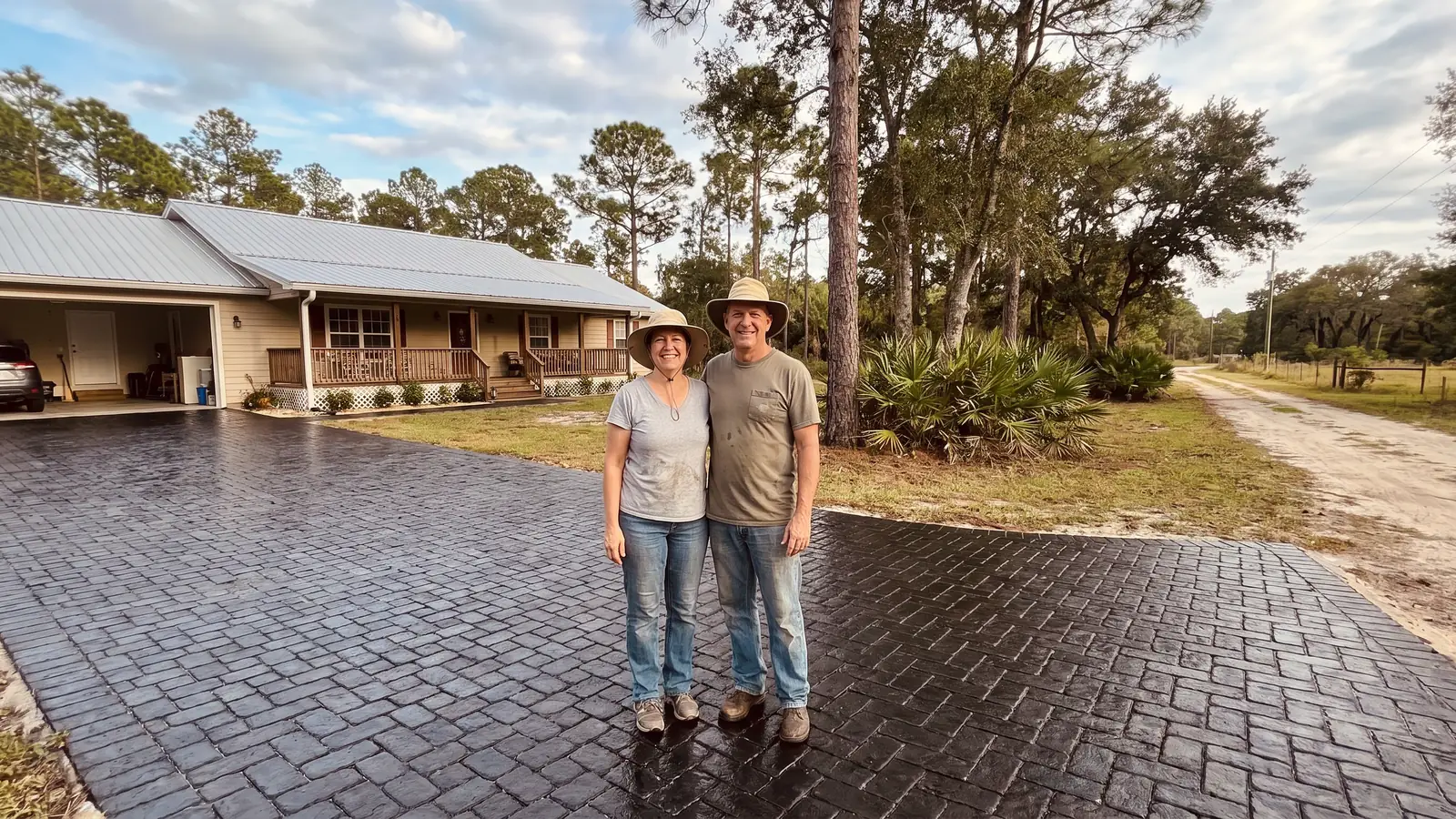
Paver sealing for San Jose homes
Paver Sealing in San Jose, FL
San Jose pavers under big oaks can be washed and sealed, so call (904) 875-8988 for a free estimate.
- Brings out deeper paver color
- Fresh joint sand helps lock pavers in place
- Gives weeds less room to grow
- Makes the surface easier to keep clean
- Free estimate, no obligation
Request a Free Estimate
Free, no obligation.
Fast, careful paver sealing in San Jose
Paver sealing is available in San Jose, with a free estimate and a reply within 1 business day, usually much sooner. San Jose driveways, courtyards and pool decks can all be washed, re-sanded and sealed by a local contractor, from the river blocks to the streets around San Jose Boulevard. To get started, ask for a free estimate.
Maybe your courtyard pavers have gone brown under the oaks, with acorn stains near the garage, sand missing along the edges and a green edge where the wall stays damp. After a wash, new joint sand and a fresh coat, that same patch can read as one clean color again. If you would like to talk it over first, call (904) 875-8988 and describe your courtyard or drive.
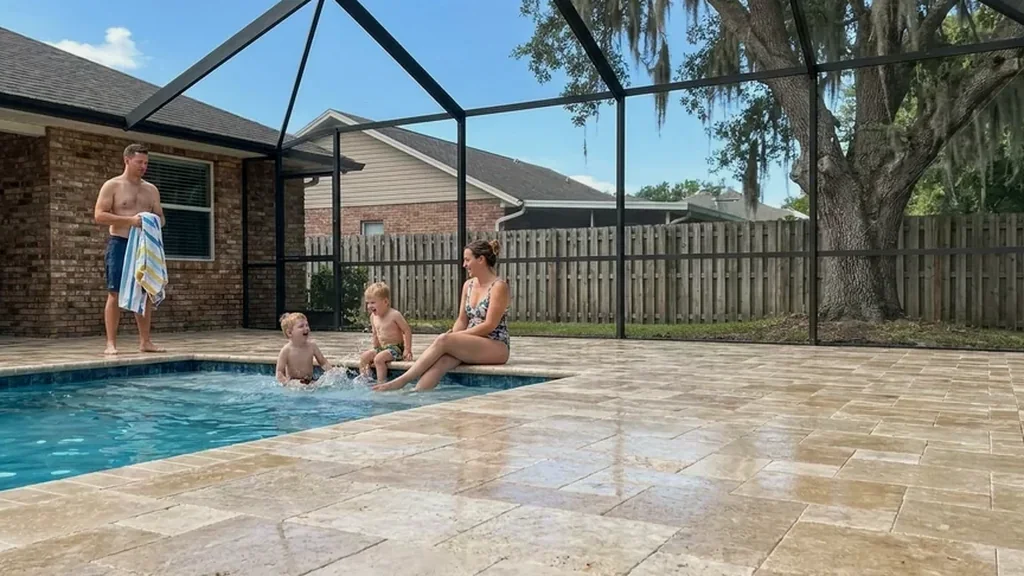
Why hire a local paver sealing contractor in San Jose?
San Jose homes run from 1920s Mediterranean Revival houses to midcentury ranches and gated condos, so the right plan changes from block to block. To hear what fits your block, ask for a free estimate.
A look at the pavers, free of charge
The contractor looks over your San Jose pavers at no charge and gives you a number before anything is agreed. There is no obligation.
Prices you can compare
Published prices here sit between $1.75 and $3.25 a square foot for cleaning, re-sanding and sealing. Use that span as a yardstick for any San Jose bid.
Care beside stucco and tile
Courtyards often sit next to stucco, tile or old brick. Ask how the rinse water will be kept off those walls.
You make the call
You choose the date and the finish, and you can say no after the estimate. Replies come within 1 business day, usually much sooner.
Get Your Free Estimate in San Jose
Tell us about your pavers in San Jose.
Free, no obligation
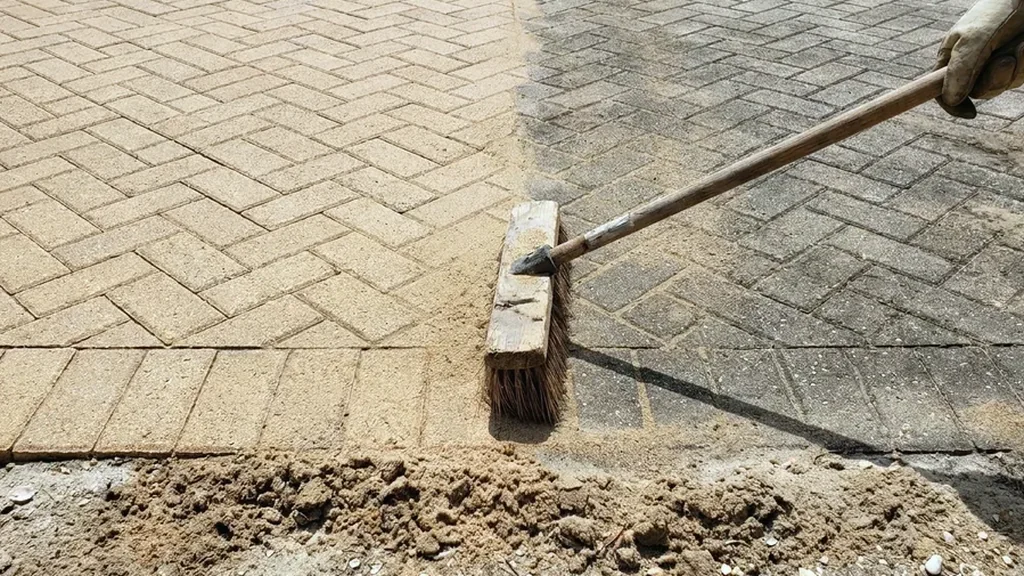
What paver problems show up most in San Jose?
Acorns and leaf stains under big oaks
Live oaks can spread 60 to 120 feet, UF/IFAS says, and water oak acorns leave stains on asphalt and concrete. According to Wikipedia, large oaks with draping moss shade most San Jose homes. A driveway or courtyard here can pick up brown spots that darken the longer they sit. Those marks get worked on before any sealer goes down, since a coat would lock them in. If you park under the same tree every day, tell the contractor, because that spot will look worst.
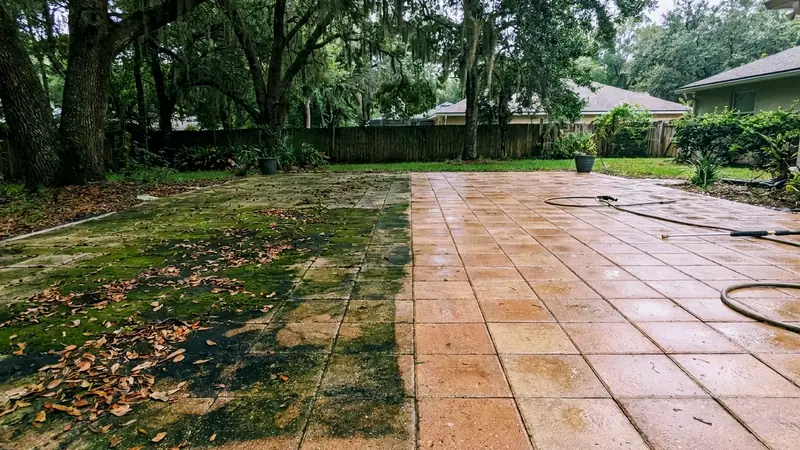
Green film where the shade stays
Green algae grows in shade where moisture lingers, and Florida's humidity keeps it coming back. A San Jose walkway on the north side of a house, under moss-draped branches, is a likely place for it to start, and so is a courtyard hemmed in by walls. Slick algae on a front walk is a safety problem as well as a looks problem. A wash clears it, and San Jose's plan for paved sidewalks on every street, rare in suburban Florida in the 1920s, means walks have long mattered here. Remember that algae returns wherever moisture and shade return, so it helps to trim back low branches where you can.
Joint sand that heavy rain moves
USDA soil maps list the Ortega series, first described in Duval County, as deep, moderately well drained sand whose water table can rise after heavy rain. Jacksonville gets roughly 52 inches of rain a year, and most of it falls from May to September. Sandy ground and hard rain mean joint sand can wash out, and open joints invite weeds. Refilling the joints is part of every sealing job here, and it helps to look at the edges beside the lawn, where sand tends to leave first.
Old coats from many owners
San Jose was planned in the 1920s, and after World War II ranch and midcentury homes were built beside the Mediterranean Revival houses. Only 37 structures were finished before building stopped in the 1920s, so most San Jose homes came later and their pavers came later still. Pavers added to any of those homes over the years may carry coats from several owners. A solvent-based coat blocks water-based sealer from going on top, so the contractor has to find out what is on the surface first. A patchy sheen or a coat that peels is a clue that something older is underneath.
Stucco, tile and brick beside the pavers
Marsh and Saxelbye designed many early San Jose buildings in the Mediterranean Revival style, and stucco, tile and masonry still sit beside courtyards and entry drives. Wash water and cleaners can mark porous walls and old tile if they run the wrong way. A contractor who plans the rinse and protects those surfaces keeps the job to the pavers and nothing else, which matters on houses that have lasted a century. If your walls are painted stucco or soft old brick, say so at the first visit.
Do San Jose Estates, Epping Forest and The Villages need different sealing plans?
The plan changes less than the surroundings do. San Jose Estates was chartered in 1925 and planned by John Nolen, and several houses on Via de la Reina are on the National Register of Historic Places. Courtyards and entry drives there often meet stucco and tile, so tell the contractor what your walls are made of when you ask for a free estimate. That one detail shapes how the wash is planned.
Epping Forest began as a 58-acre riverfront estate off San Jose Boulevard and is now a gated community of about 90 homes and 80 condominiums. The Villages of San Jose, a 1980s development, stands where the Beauclerc Country Club once was. Gated and planned streets often come with association rules, so read yours first and then call (904) 875-8988.
Away from the river, lots are smaller and homes vary from midcentury ranches to small wood-frame starters. A shorter drive means a lower total at the same rate per foot, and a waterfront drive is a bigger job. In local historic districts and on local landmarks, Jacksonville asks for a Certificate of Appropriateness before exterior work, driveways included. Check your address first, then ask for a free estimate and mention what you learned.
What does paver sealing cost in San Jose?
Regional companies post prices of $1.75 to $3.25 for every square foot cleaned, sanded and sealed. A San Jose courtyard with fine detail takes more hand work than an open slab, and heavy oak stains add washing time. Pavers that were sealed before need the old coat identified, which can add a step. For a real number on your pavers, call (904) 875-8988 and ask for the free estimate.
Lot size matters as much as the rate. Waterfront San Jose properties are large, and homes away from the river sit on smaller lots, so the same rate gives different totals. Walkways and pool decks are added to the driveway when the area is measured, so a property with several surfaces is quoted as one total with each part listed. When you ask for a free estimate, get the area and the sealer's name written down.
| Paved area | Typical example | Clean, sand and seal |
|---|---|---|
| 300 sq ft | Small patio or walkway | $525 to $975 |
| 600 sq ft | Two car driveway | $1,050 to $1,950 |
| 1,000 sq ft | Large driveway or pool deck | $1,750 to $3,250 |
| 1,500 sq ft | Driveway plus pool deck | $2,625 to $4,875 |
Math based on the $1.75 to $3.25 per square foot that Northeast Florida paver companies publish. Your contractor sets the actual price after seeing the surface. Repairs, leveling and stripping failed sealer are usually extra.
How does a paver sealing job work in San Jose?
Walk the lot and read the old coat
The contractor walks your drive, courtyard and walks, noting shade, stains and any pavers that have sunk or lifted. Those get repaired first, because sealer preserves any dip it covers. If an earlier owner sealed the pavers, the product matters. Mention any history you know, even a rough guess at the year, and say if the courtyard was ever redone.
Wash out the tannin and the green
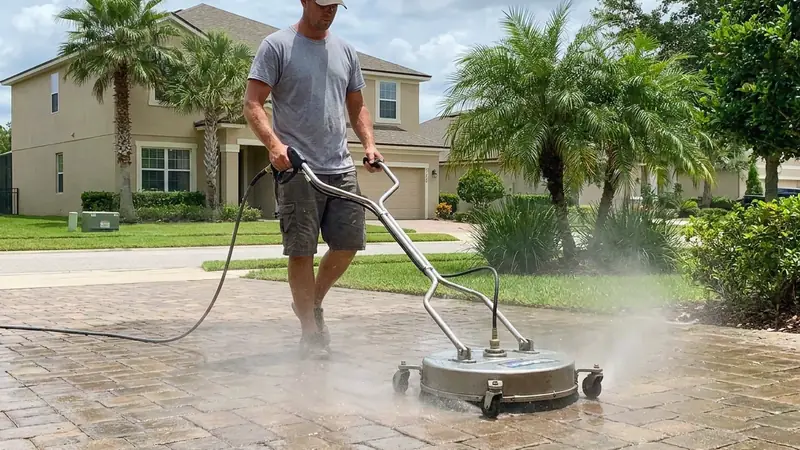
Washing is next. Oak stains, algae and old grime are lifted, and sprinkler rust gets its own treatment. Rinse water is steered clear of stucco, tile and flower beds where possible, and furniture and planters are moved before the wash. Sealer would lock stains in, which is why none are left behind.
Refill the joints with sand
A wash removes joint sand, which is why fresh sand goes back in before any sealer. Duval County ground is sandy and summer rain moves it, so open joints return if they are not filled and the surface swept. Weeds and soil have a harder time starting in a full joint, and the pavers hold their lines better when the sand is tight.
Let the surface dry first
Sealer needs a dry surface. Under big San Jose oaks, a walkway can stay damp long after a sunny driveway has dried. The contractor watches the forecast and waits instead. A short delay beats trapping moisture under the coat, and it keeps the finish from turning patchy.
Apply the finish you picked
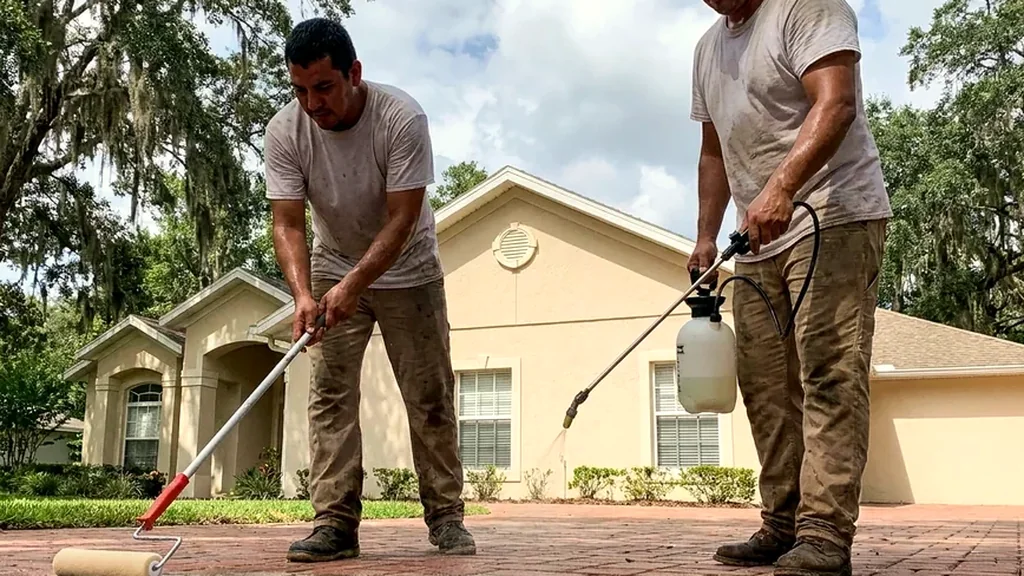
The sealer goes on in the finish you chose, sprayed and then back-rolled for even coverage, as manufacturer guidance recommends for most sealers. Companies commonly quote a gap of two to five years, and a shaded courtyard or an oak-covered drive may sit at the short end of it. Walking on sealed pavers is usually fine within hours, a Jacksonville company says, but cars should wait about a day. Ask what that means for your product before you plan a party or a delivery.
Complete paver services in San Jose
Sealing in San Jose follows a set order of wash, new sand, drying and sealer. The wash removes oak tannin, algae and old grime, and the joint sand is replaced afterward. Sealer goes on only when the surface is fully dry, so nothing is trapped underneath. To learn how long each stage takes on a shaded lot like yours, call (904) 875-8988.
Driveways and walkways here take acorn stains, tire marks and shade. Courtyards and entry patios near stucco need careful rinsing. Pool decks bring chlorine and bare feet, so the finish matters there. Tell the contractor each surface you want sealed when you ask for a free estimate, so the estimate covers the whole property in one visit and the finish matches from the drive to the patio.
A manufacturer bulletin says spraying sealer and then back-rolling it is the recommended method for most sealers, so the sprayer and the roller both have a job. Check the old coat first, since water-based sealer cannot go over solvent-based. Matte suits a Mediterranean front, while a wet look shows scuffs sooner. Call (904) 875-8988 to pick a finish.
Plan around the rain: the wetter months are May to September, and the cool, dry stretch runs November to April. A shaded San Jose walkway can stay damp after a sunny drive has dried. One Jacksonville company says to keep cars off about a day after sealing. To book a window, ask for a free estimate.
Questions to ask before you hire
- What do I do about pavers that have sunk or shifted near my pool?
- Which sealer do you plan to use on my pavers, and is it a film-forming or a penetrating type?
- Will the sealer make my pool deck slippery when it is wet?
- Will the sealer leave a wet look, or a natural matte finish?
- Will you wash the pavers with a surface cleaner, or only with a hand wand?
- How soon can cars drive on the driveway after the final coat?
- Can you match the sealer sheen to my neighbor's driveway?
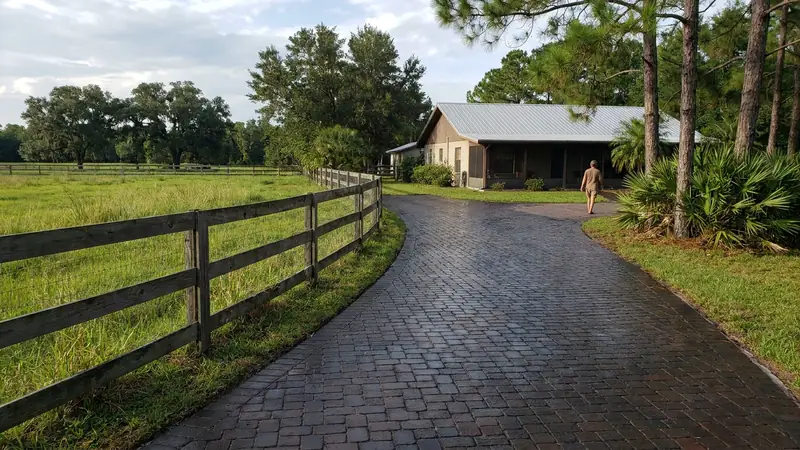
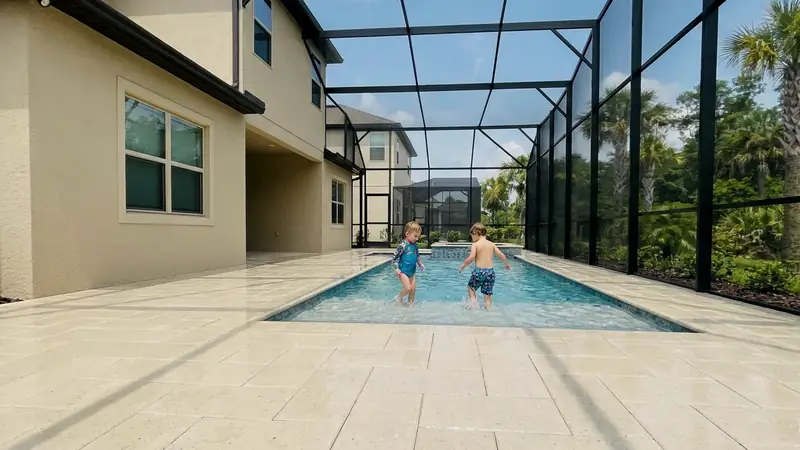
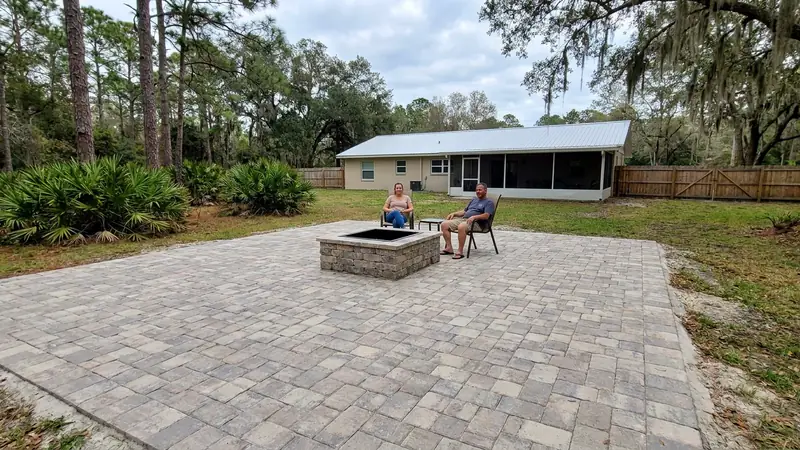
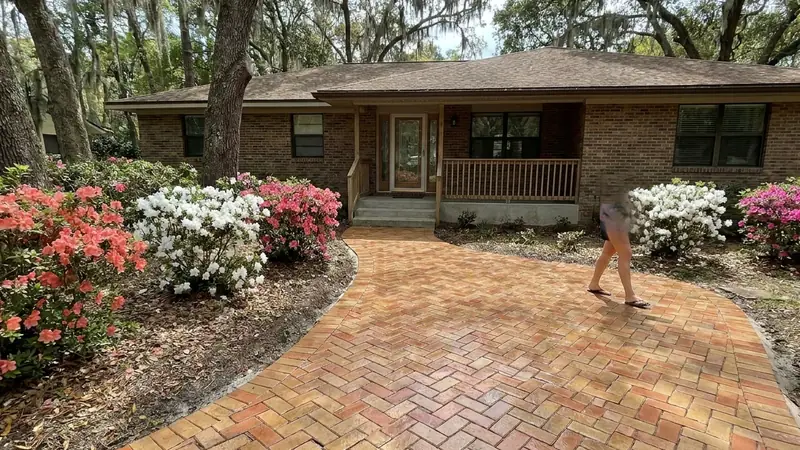
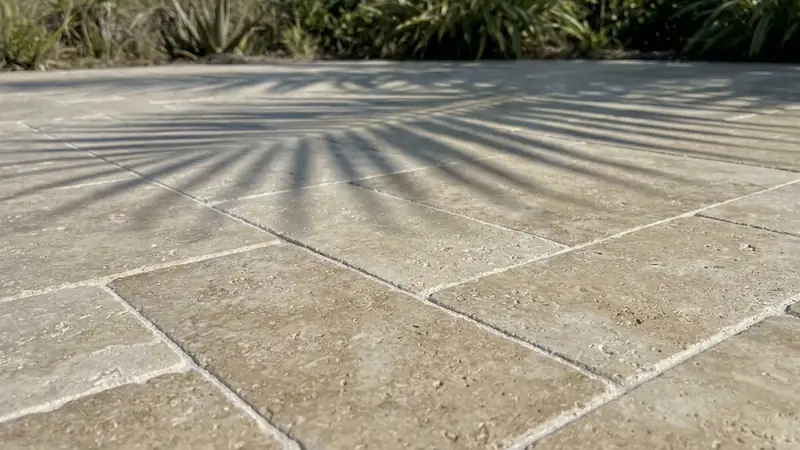
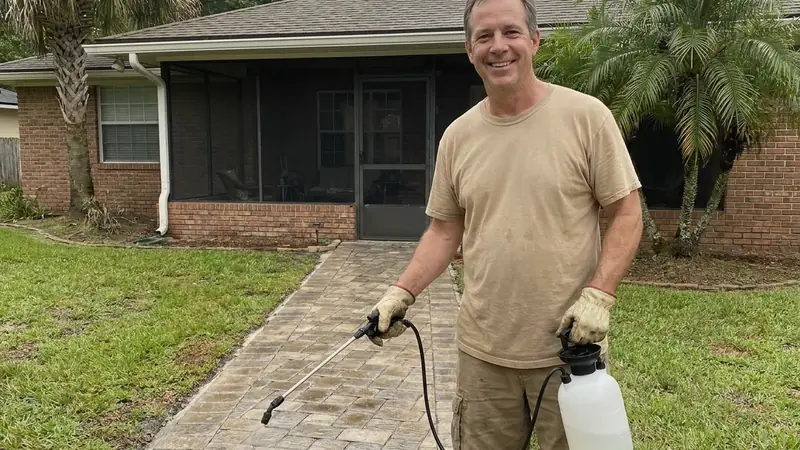
What do sealed pavers look like around San Jose?
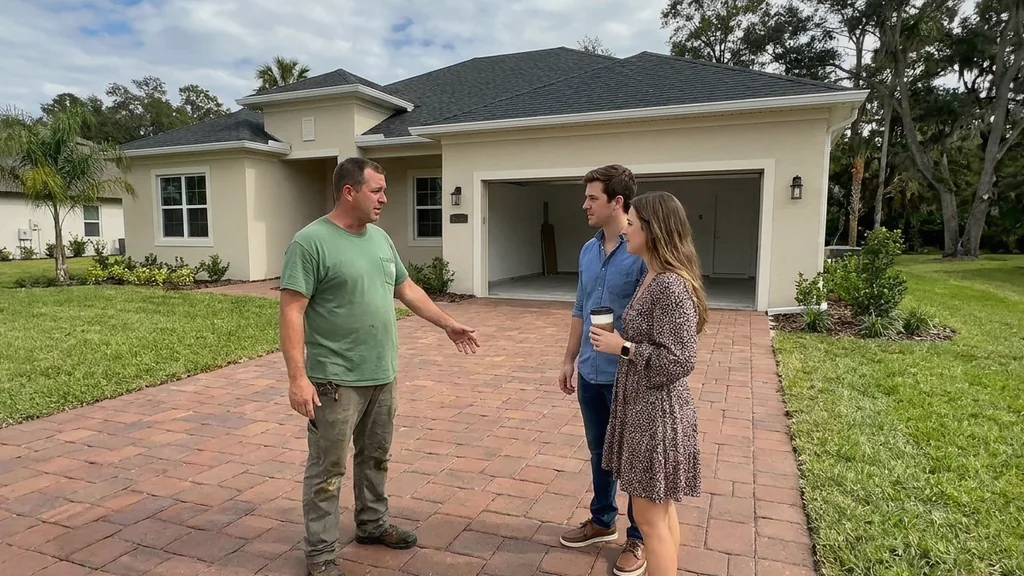
Why local matters in San Jose
A contractor who knows San Jose asks about your trees first. Live oaks never drop all their leaves at once, and acorns fall in their season, so the stains they leave decide how much washing comes before any sealer. Someone from outside the area may not think to ask, and that is how stained spots end up under the new coat. To talk with a contractor in the San Jose area, call (904) 875-8988.
Older construction adds a second question. A courtyard beside a Mediterranean Revival wall needs gentler rinsing than a driveway by a garage door. A local contractor plans where the water will run before the first spray. When you ask for a free estimate, mention what your walls and walks are made of.
Local timing helps as well. Summer rain here arrives in sudden downpours, and the quiet season runs from late autumn into spring. A San Jose patio under moss-draped oaks may need extra dry time after a storm. Call (904) 875-8988 and ask which window fits your street.
What should I know about San Jose's history before a paver job?
San Jose Estates was chartered on January 25, 1925, and planner John Nolen laid out radial streets around Plaza del Sanchez, with paved sidewalks on every street, which was rare in suburban Florida then. Donald Ross laid out the 18-hole golf course, and the San Jose Country Club course fills the triangle formed by San Jose Boulevard and Via de la Reina. Lots in the first phase of San Jose Estates had all sold by August 10, 1925. If you live near the Plaza, ask for a free estimate.
The San Jose Hotel opened on New Year's Day 1926 and closed in 1928, and The Bolles School has used the building since 1933. Epping Forest's 1927 mansion and Goodbys Creek Preserve, which holds 39 acres off San Jose Boulevard, are two more landmarks. The hotel later gave way to the school campus, which is a handy way to describe where you live. If you are near any of them, call (904) 875-8988 and give your street name.
Frequently Asked Questions
How much does sealing pavers cost per square foot around San Jose?
Expect between $1.75 and $3.25 per square foot for the clean, sand and seal that regional companies commonly publish. Oak stains, thin joint sand and an old coat can push a San Jose job toward the high end of that range. Have the quote state the total area, so bids can be lined up fairly.
Does San Jose gain much from sealing pavers, as in the rest of Florida?
It can be, as long as you plan for upkeep. A Jacksonville company says a surface where water beads up still has working sealer. Plan on two to five years between coats, as companies commonly quote, and know that a wet look shows scuffs sooner than matte.
How long will sealer last on San Jose pavers?
Companies commonly quote two to five years between sealer coats. Heavy oak shade and daily tires point toward the shorter end of that span. One Jacksonville company says pavers that soak up water and darken are due for a new coat.
Is it better to spray or roll paver sealer in San Jose?
Both, in most cases. Most sealers go on with a sprayer and then a roller, and a manufacturer bulletin says the roller evens out excess that could dry cloudy. Ask the contractor which product and method are planned for your pavers, and ask for the product name in writing.
What makes paver sealing so expensive around San Jose?
You are paying for washing, refilling the joints and sealing, with drying time between. Each square foot is charged, so a large drive or courtyard adds up. Published prices run from $1.75 up to $3.25 per square foot.
Do I need city approval to seal pavers at a historic San Jose address?
It depends on the address. Jacksonville requires a Certificate of Appropriateness for exterior work, driveways included, in local historic districts and on local landmarks. The city's Land Development Map shows whether your lot is covered, and city staff can answer sealing questions.
What do San Jose courtyards beside stucco and tile need during sealing?
They need a plan for the rinse water, since porous walls and old tile can be marked when wash water runs the wrong way. Tell the contractor what the walls are made of at the first visit. The wash is then aimed away from them, and sealer goes only on the pavers.
Nearby areas we serve
Ready for a Free Estimate in San Jose?
Call (904) 875-8988 and tell us about your pavers.
Free, no obligation