
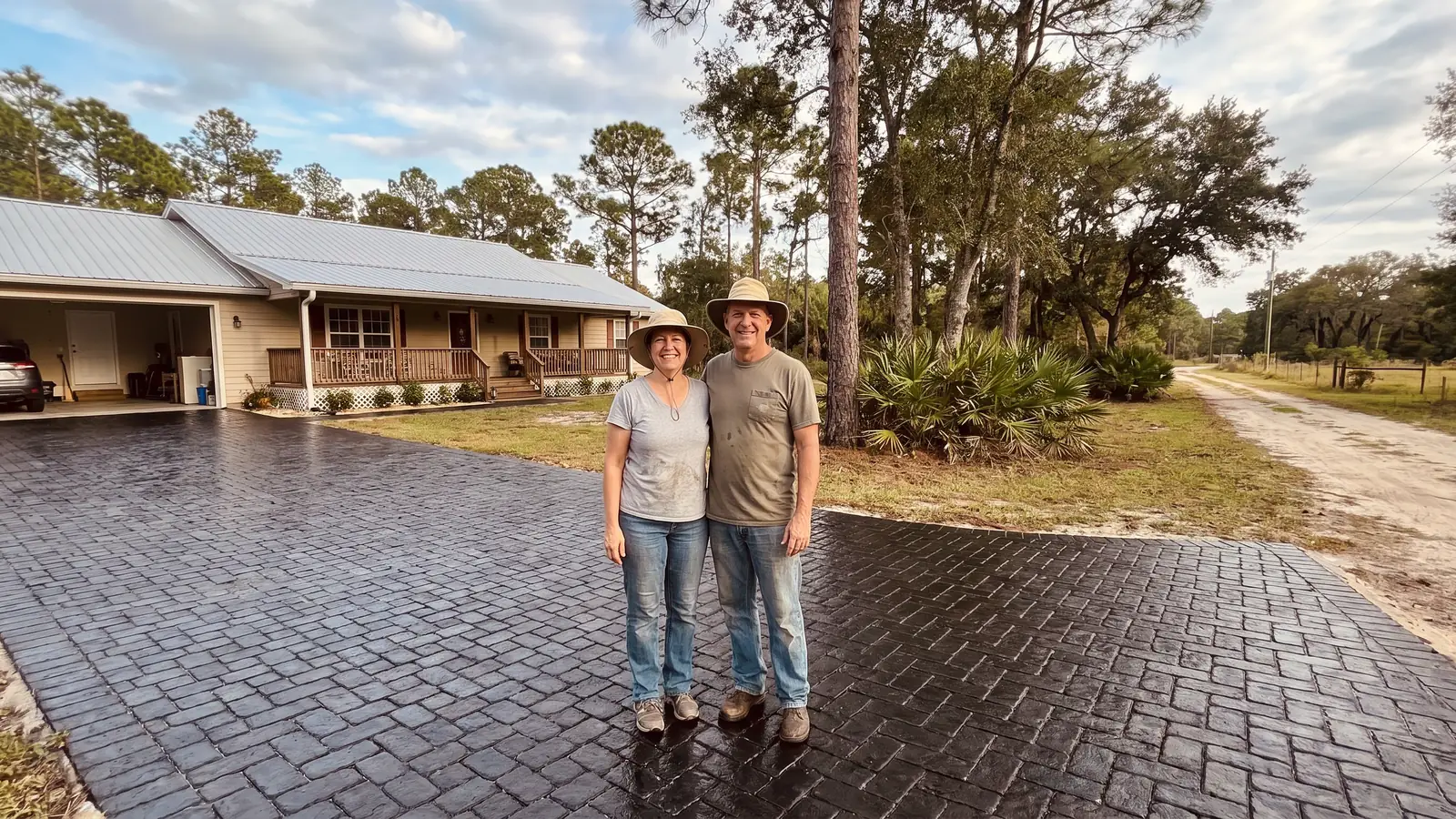
Deeper color and joints that stay put
Paver Sealing in Whitehouse, FL
Call (904) 875-8988 and a local contractor will price sealing for your Whitehouse driveway, pool deck or walkway.
- Brings out deeper paver color
- Fresh joint sand helps lock pavers in place
- Gives weeds less room to grow
- Makes the surface easier to keep clean
- Free estimate, no obligation
Request a Free Estimate
Free, no obligation.
Who can seal pavers at my Whitehouse home?
A local contractor seals pavers throughout Whitehouse, FL, and you will hear back within 1 business day, usually much sooner. The estimate is free, and booking is up to you. To begin, call (904) 875-8988.
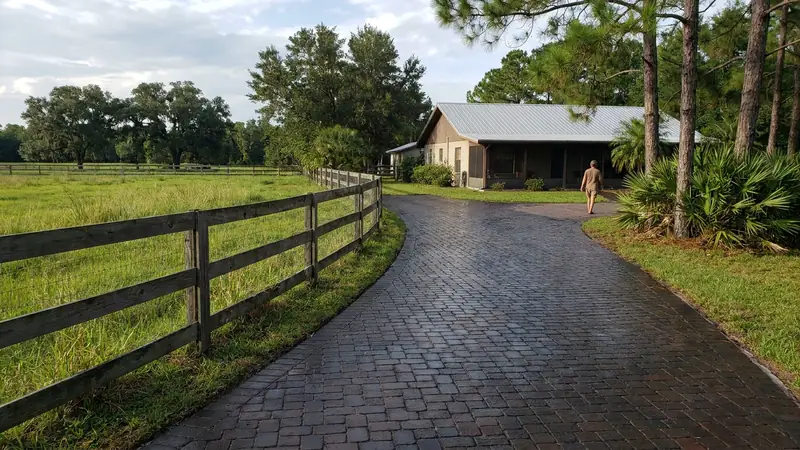
Sealing deepens the color of your pavers, keeps joint sand where it belongs and makes dirt and mildew easier to rinse away. Picture the long drive up to your house after a humid summer, gray at the edges and sandy at the seams, turned dark and even again with every joint packed. A drive carries tires and oil drips and a pool deck carries splash and bare feet, so every area needs its own approach. Share how the family uses each area when you ask for a free estimate.
Paver Sealing Whitehouse Is Proud to Serve Northeast Florida
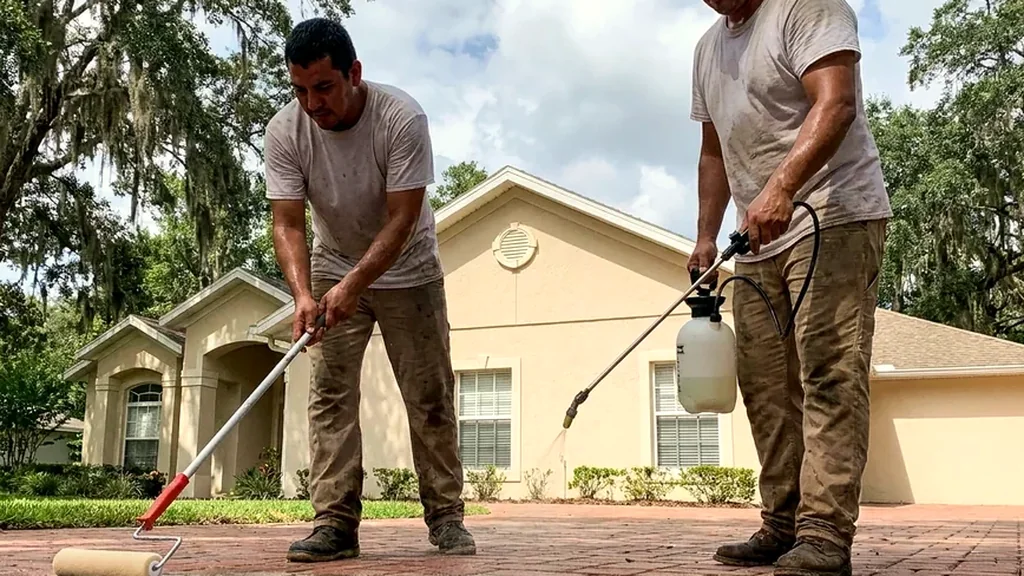
What is included when pavers are sealed in Whitehouse?
A job has four parts: an inspection, a deep wash, new joint sand and the coat of sealer. Cleaning usually takes the longest. To go over each part as it applies to your house, call (904) 875-8988.
Walk-through
The contractor logs size, low spots, cracked pavers, worn sealer and pooling water before naming a figure.
Deep clean
Mildew, rust and dirt come off with a cleaner made for the stain and a controlled wash.
Joint sand
Kiln dried sand packs each gap, which ties the pavers together and crowds out weeds.
Sealer coat
Sealer is applied to bone dry pavers in thin passes, at the coverage the label specifies.
How can I tell my pavers need sealing?
Watch for chalky color, joints that have dropped below the paver edges, sand strewn over the drive after a storm and water that sinks in rather than beading. Stallone's Pro Wash puts it plainly: once water soaks in quickly, a new coat is due. Topping up sand while the gaps are shallow beats relaying pavers that have drifted. For a quick opinion, call (904) 875-8988.
Which paver sealer works in Florida humidity?
No one product suits every house, so ask which sealer the contractor intends to use and the reason for the choice. Stallone's Pro Wash applies Trident sealer in four finishes, from a high gloss wet look to a natural matte, plus a penetrating type for natural stone. To compare options for your pavers, call (904) 875-8988.
Unilock says water-based sealer is easier to clean up and hardens joint sand, while solvent-based sealer is somewhat more durable but needs pavers and joints that are perfectly dry. Solvent products also evaporate faster, so cooler weather suits them better. Ask which product goes where when you ask for a free estimate.
Wet look or natural finish: which suits my home?
A wet look gives deep, rich color with a sheen, and a natural matte finish stays near the pavers' original look. Unilock says a wet look deepens color, while a penetrating matte keeps texture and traction, and that high sheen can be slippery when wet. Around a screened pool, footing usually matters more than shine. To see samples of both, ask for a free estimate.
How often should pavers be resealed in Whitehouse?
Expect two to five years, depending on the area. Safe Touch calls two to three years typical for this county, and full sun, pool chlorine and summer storms pull a coat toward two. Family Handyman and Unilock both put the cycle at three to five years once the old coat wears down. Your schedule follows the sun and traffic each area sees. To have your coat checked, call (904) 875-8988.
Will extra coats of sealer protect pavers longer?
No. Family Handyman writes that sealing more frequently adds no protection and may leave a discoloring film on the pavers. Unilock links stacked layers to uneven gloss and a whitish film. One thin, even coat at the label rate is enough, so if a bid pitches three or four coats as added protection, ask why before you ask for a free estimate.
When is the right time to seal pavers in Whitehouse?
The forecast matters more than the calendar. Unilock asks for clear skies for 24 to 48 hours before sealing, up to 48 hours of dry weather after and temperatures from about 50 to 90 degrees, with 75 the sweet spot. Pavers baked by the sun can stain or start to peel too soon. Summer storms in Duval County can push a date back a few days. To choose a date the forecast supports, call (904) 875-8988.
New pavers have to wait. Unilock says to hold off until efflorescence, the white salt haze, is gone, which typically takes two to three months and can run to a year. Its guidance for new installs is 60 to 90 days. If your pavers went in lately, mention the install date when you ask for a free estimate.
Can sealing fix pavers that have sunk or spread apart?
No. According to Unilock, a coat of sealer will not repair poor drainage or a faulty base. Pavers that wobble under a tire or sit in a puddle after rain need base work first, since joint sand only holds on a level surface. Ask whether leveling is built into the price or billed on its own when you ask for a free estimate.
Which areas around a Whitehouse home can be sealed?
A coat can go on a driveway, a screened pool deck, a back patio or a front walk. Each wears in its own way, so the plan shifts from one to another. To begin where the problem is worst, ask for a free estimate.
Long driveways
A long drive takes tires, oil drips and open sun from the road to the garage. Sealing it keeps the color even and the joints full where the wheels run.
Screened pool decks
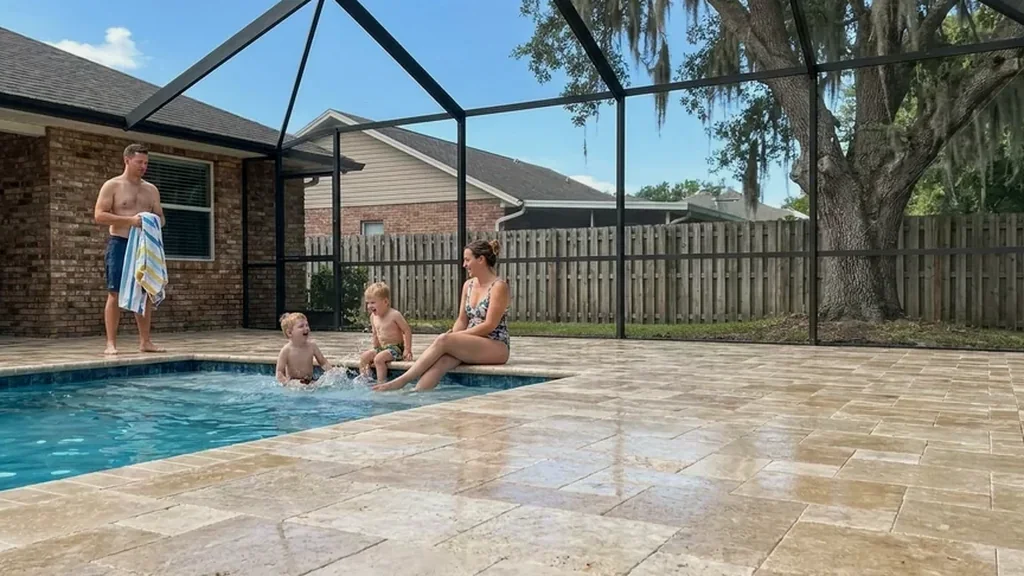
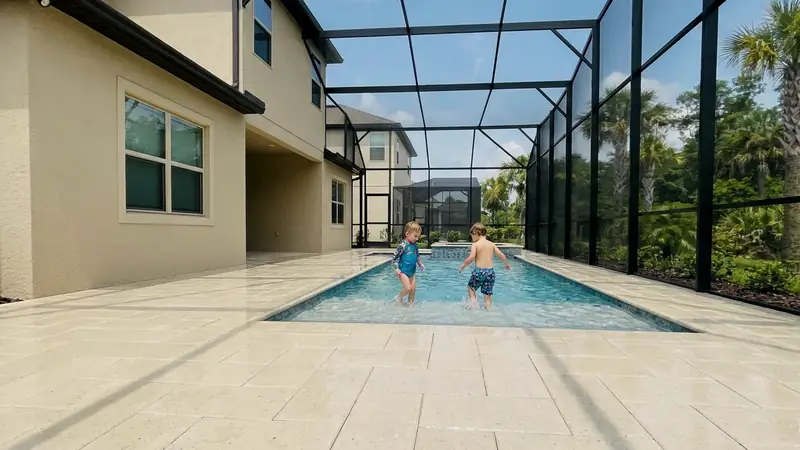
Pool decks take splash, chlorine and bare feet, a mix that wears a surface differently from a drive. Sealing a pool deck should still leave it with good footing when wet.
Back patios and fire pit areas
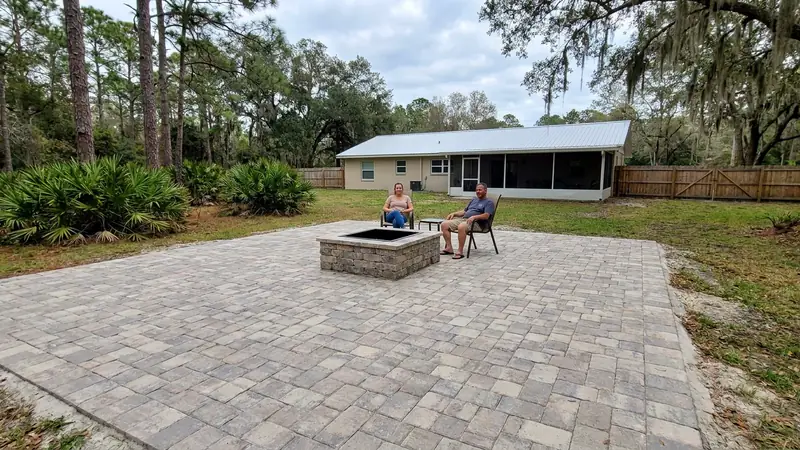
Patios on a big lot sit under trees, in full sun or both, so wear is uneven. Sealing a patio starts with the greenest, dampest corners.
Front walks and entries
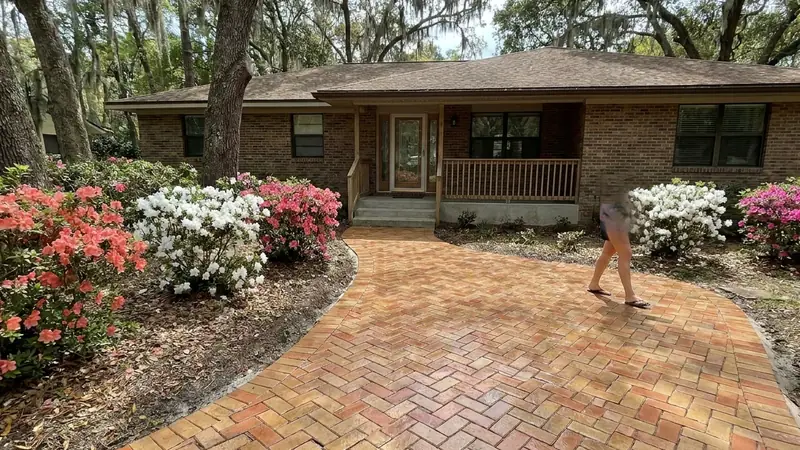
Front walks collect soil, mulch and drips from planters. Sealing the front walk is a small job, yet it is where every visitor steps first.
What causes paver trouble around Whitehouse?
Five problems come up again and again in this part of Duval County: sand loss after storms, mildew in damp corners, orange irrigation stains, sun fading and a soft base. Each one is cheaper to handle early. To learn which of them affect your pavers, call (904) 875-8988.
1. Sand washing out in summer storms
Safe Touch reports that heavy summer rain pulls sand out of pool decks and driveways. Once the joints run low, pavers start to shift and weeds take root, so sand goes back before any sealer.
2. Green and black growth in damp corners
Safe Touch places Duval County in a humid subtropical belt. Shaded edges and spots near the sprinklers stay wet longer, and that is all mildew needs.
3. Orange marks from irrigation
Iron in well water or reclaimed irrigation leaves orange marks, Safe Touch explains, and more pressure makes them worse. A rust treatment comes first, then a rinse, then the sealer.
4. Fading on open driveways
A drive with no shade takes sun from morning to evening, and unsealed color goes chalky first there. Safe Touch says full sun pulls a reseal closer to two years.
5. A soft base under the pavers
Much of Northeast Florida sits on sandy flatwoods soil such as Leon fine sand, which can hold a seasonal high water table within a foot of the surface in wet periods. Unilock warns that sealer is not a cure for drainage or base problems, so low spots get fixed first.
What does paver sealing cost in Whitehouse?
Expect about $1.75 to $3.25 per square foot in Whitehouse for the clean, sand and seal together, the range Safe Touch publishes for Duval County. Stallone's Pro Wash starts its sealing price at $1.90 per square foot, then adjusts for area, paver type and any joint sand that has to go in. Failed old sealer is stripped first, and that adds cost. For a number written for your home, ask for a free estimate.
Size matters on a big lot. A 2,000 square foot driveway and patio together would run about $3,500 to $6,500 at that range. If a quote looks far lower, ask which steps it leaves out. If a bid is already in your hands, call (904) 875-8988 and compare it with these figures.
Looking only for a wash? The paver cleaning and joint sand page covers a wash by itself, the list of places served shows where contractors go, and the home page starts the request.
| Paved area | Typical example | Clean, sand and seal |
|---|---|---|
| 300 sq ft | Small patio or walkway | $525 to $975 |
| 600 sq ft | Two car driveway | $1,050 to $1,950 |
| 1,000 sq ft | Large driveway or pool deck | $1,750 to $3,250 |
| 1,500 sq ft | Driveway plus pool deck | $2,625 to $4,875 |
Math based on the $1.75 to $3.25 per square foot that Northeast Florida paver companies publish. Your contractor sets the actual price after seeing the surface. Repairs, leveling and stripping failed sealer are usually extra.
Why hire a contractor who works near Whitehouse?
A contractor who works in far west Duval County already plans for summer storms, sandy ground and long drives. You receive the price in writing, and hiring stays your call. To begin, call (904) 875-8988.
A contractor who works out here
A company that covers Whitehouse already works in far west Duval County. Your first visit then starts from local knowledge instead of guesses.
Nothing to pay for a quote
The look at your pavers and the estimate cost nothing. Should the price not work for you, decline and nothing is owed.
Published rates to measure against
Paver companies across Northeast Florida publish their per square foot rates, and this site passes those ranges along. If a bid lands far outside those numbers, ask what explains the gap.
Your pace, your decision
Have the price written down, and take as long as you like to think it over. The contractor standards page covers what to verify before you sign.
Ready for a free paver sealing estimate in Whitehouse?
Phone or use the brief form, and an answer arrives in 1 business day, often well before.
Free, no obligation
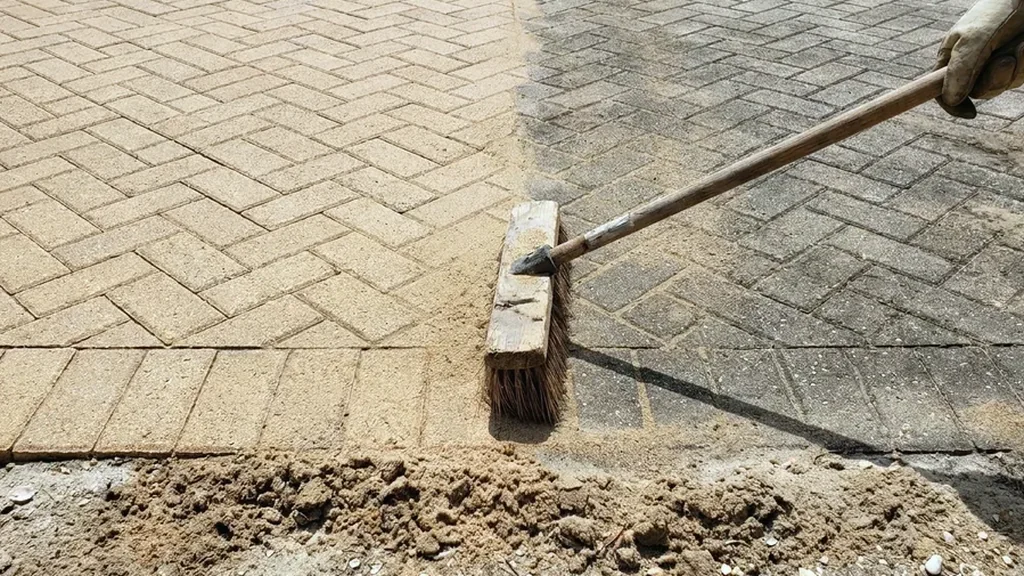
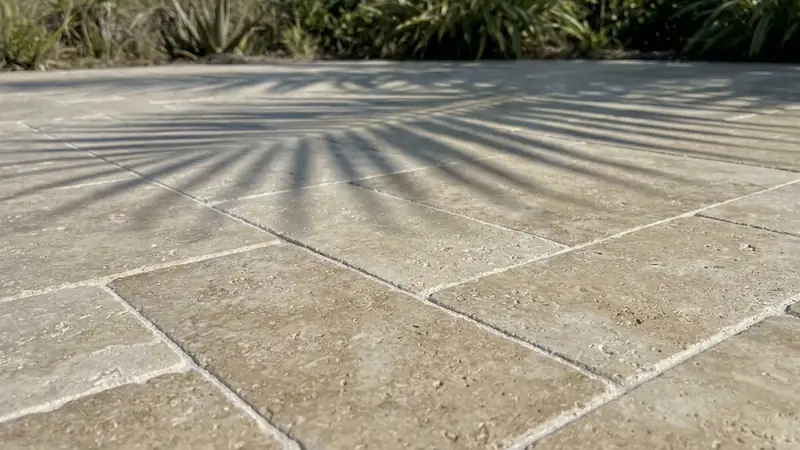
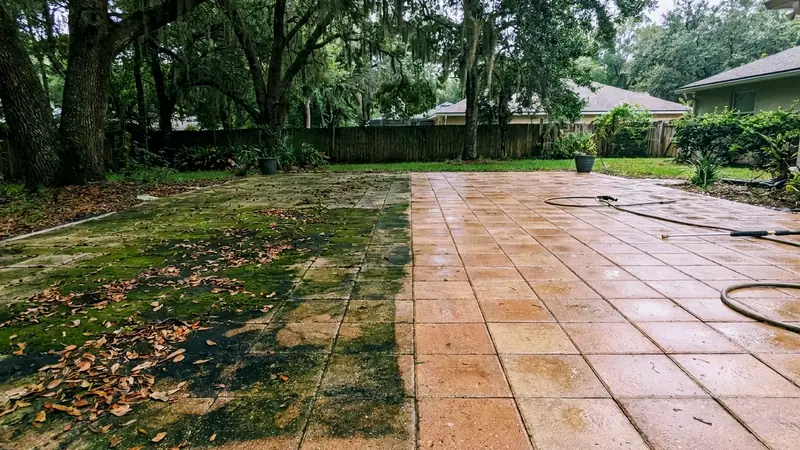
How do Whitehouse pavers look after a fresh seal?
How does the paver sealing process work from start to finish?
Nearly every job runs through five steps, beginning with an inspection and ending with a walk-through. If you are ready to schedule, call (904) 875-8988.
1. Measure and look it over
To price the sealing job, the contractor measures the area and marks dips, cracked pavers, old sealer and any place water collects.
2. Cover and wash
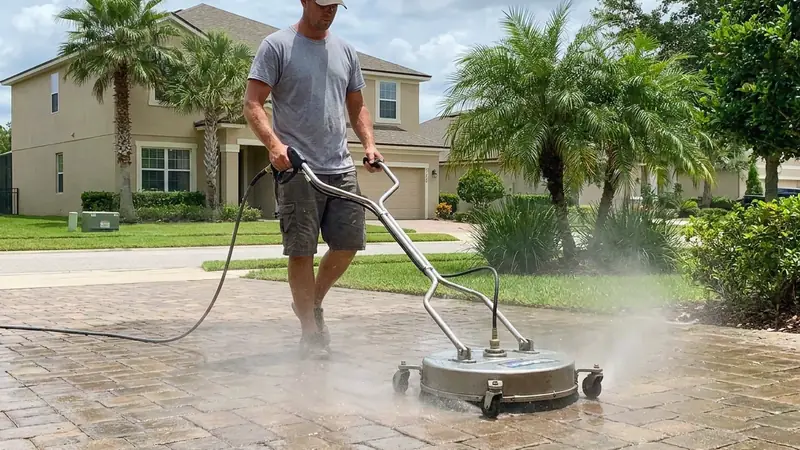
Shrubs, screen panels and the garage door get covered while the irrigation timer is turned off. A rotary surface cleaner washes the pavers evenly, as Safe Touch describes, so the joints are not blasted out.
3. Treat the stains
Rust, mildew and efflorescence each get a cleaner made for that stain, tried first on a small spot.
4. Refill the joints
Once the pavers are dry, kiln dried joint sand is swept in, settled and topped off, and the extra is blown clear.
5. Seal and walk the job
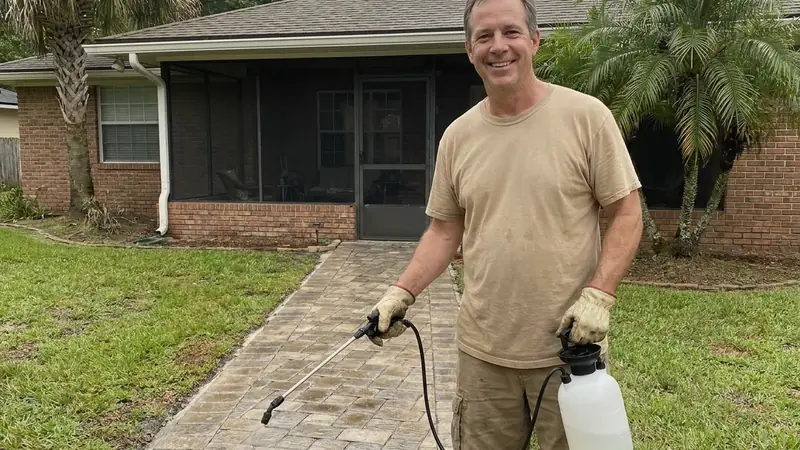
If sealer is on the work order, it goes down with a pump sprayer and gets smoothed by a roller. Then the contractor walks the finished area with you and names how long feet and tires should stay off.
Frequently Asked Questions
How much to clean and seal pavers?
Safe Touch, a company that washes pavers in Duval County, lists $1.75 to $3.25 per square foot to clean, sand and seal. For a 600 square foot Whitehouse driveway, that works out to about $1,050 to $1,950. Repairs, stripping old coats and added joint sand raise that figure.
How long do paver sealers last?
Anywhere from two to five years. Stallone's Pro Wash, a Northeast Florida company, gives that range for a professionally applied sealer, and Safe Touch says full sun, pool chlorine and summer storms pull it toward two. Unilock, a paver maker, says many owners reapply every three to five years.
Why is paver sealing so expensive?
Most of the price pays for prep. A full job means washing, treating stains, refilling the joints, waiting for the pavers to dry and then laying the coat. Safe Touch says empty joints or failed sealer turn it into a two-day restoration, and old sealer has to be stripped first.
Why do my pavers have white haze after sealing?
Usually trapped moisture, too much sealer or sealer laid over an incompatible old coat. Unilock lists all three as causes of a whitish film. Sealing a damp surface or putting on extra layers raises the odds, so a dry surface and one even coat are the safer plan.
Should you pressure wash your driveway before sealing it?
Yes, the surface has to be clean, but the method matters more than the force. Safe Touch uses a surface cleaner for an even finish, and Family Handyman warns against spraying directly into joint lines because it knocks the sand out. Fresh sand goes back in after the pavers dry.
Is it better to spray or roll paver sealer?
Many contractors do both. Unilock lists a sprayer with an adjustable nozzle, a foam roller or a short pile roller, and a dry roller can soak up extra sealer to stop streaks and drips. An even coat counts for more than the tool that put it down.
How long should I stay off pavers after sealing in Whitehouse?
Plan on a day or two. Unilock calls for up to 48 hours of dry weather as the coat cures, so park off the drive and leave the sprinklers off that long. The product label gives the exact times for the sealer used on your drive.
Can a long Whitehouse driveway be sealed in one visit?
Often, but not always. Safe Touch says empty joints or failed sealer turn the work into a two-day job. Unilock also advises sealing in one session, so a long drive does not end up with overlapping layers and uneven gloss. Ask the contractor how the job will be scheduled.
Will the sealer work on pavers around my pool?
It can, if the finish suits a wet surface. Unilock says a high sheen can be slippery when wet, while a penetrating matte finish keeps traction. Ask the contractor which product goes on a pool deck and why.
Time to protect your Whitehouse pavers?
Send a short request or phone, and a contractor writes back inside 1 business day, often within hours.
Free, no obligation